Bar is hard to push
Binding parts, door pressure, alignment, damage, or the wrong adjustment can make normal exit force too high.
Emergency locksmith help across Philadelphia
A panic bar should open with a normal push, and the door should close and latch on its own. If it sticks, slams, or stays open, the bar and the full door need to be checked together.
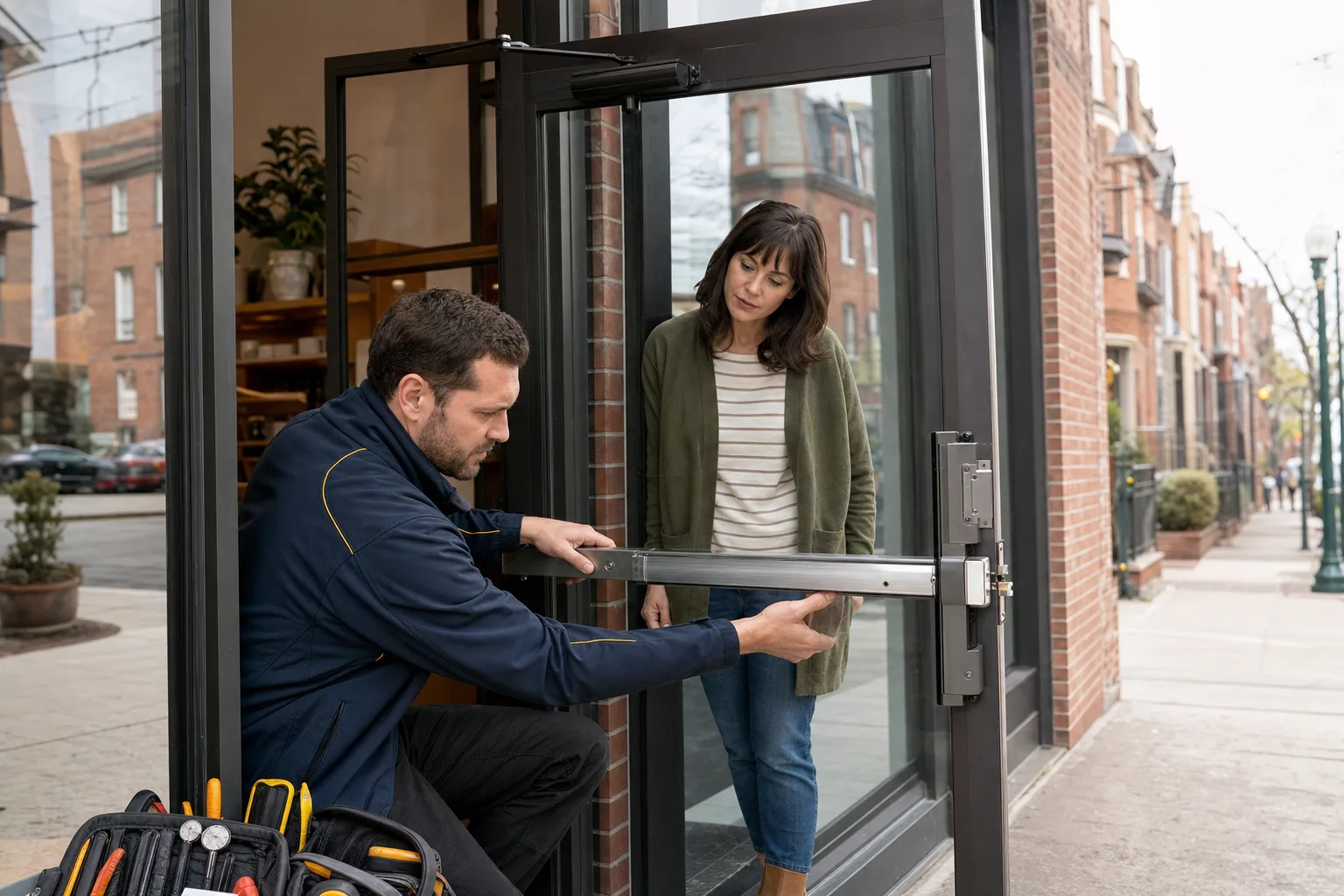
A panic bar should open with a normal push, and the door should close and latch on its own. If it sticks, slams, or stays open, the bar and the full door need to be checked together.
Tell us what still works, what stopped working, and what you already tried. This helps us understand whether the problem is the key, lock, door, ignition, or remote before the visit.
We confirm that you can approve the work and review the price before service starts. If another repair is optional, it should be explained as a separate choice.
Choose the closest example. Small details can change the right service.
Binding parts, door pressure, alignment, damage, or the wrong adjustment can make normal exit force too high.
A shifted strike, weak closer, dropped door, blocked latch, or internal wear can leave the opening unsecured.
A dogging feature, failed return, debris, or damaged parts may keep the latch retracted. Confirm intended operating mode.
The exterior key, lever, pull, cylinder, and device linkage can fail while inside exit still operates.
Remove boxes, displays, cords, and stored items from the door and path. Do not block or tie the bar.
Say whether the problem affects release, closing, latching, outside entry, alarm, or only certain times.
If the door cannot support safe exit or secure closing, follow the property safety plan and contact the responsible manager.
The right choice depends on the key, lock, door, or vehicle and what is happening now.
Rim, mortise, vertical-rod, alarmed, fire-rated, and electrified devices use different parts and service paths.
Hinge wear, frame shift, closer force, wind, rubbing, and floor contact can make a good device fail at the strike.
Occupancy, fire rating, alarm, access control, and local requirements affect acceptable hardware and repairs.
Test the bar, latch, door swing, path, and any immediate hazard.
Review device, rods, strike, hinges, closer, trim, frame, and fasteners.
Adjust, secure, service, or replace supported parts as approved.
Test inside exit, closing, latching, outside entry, alarm, and agreed operating mode.
Choose your area for local property, parking, access, and meeting-point advice.
Short answers before you call.
Often, when the device is supported and main parts are sound. Damage, missing parts, heavy wear, or incompatible changes can make replacement more practical.
The latch may be missing or binding at the strike when the door closes. Door sag, closer action, frame movement, and alignment are common causes.
Exit must remain available as required for the opening. Some devices have approved operating modes, but makeshift blocking or tying is unsafe.
Call with the exact location, a short description, and proof that you can approve the work.