Managers carry many keys
A planned master level can reduce key rings while staff keys remain limited to their normal work areas.
Emergency locksmith help across Philadelphia
A master key system lets selected keys open several planned door groups. The safest design starts with roles and doors, then gives each person only the access they need.
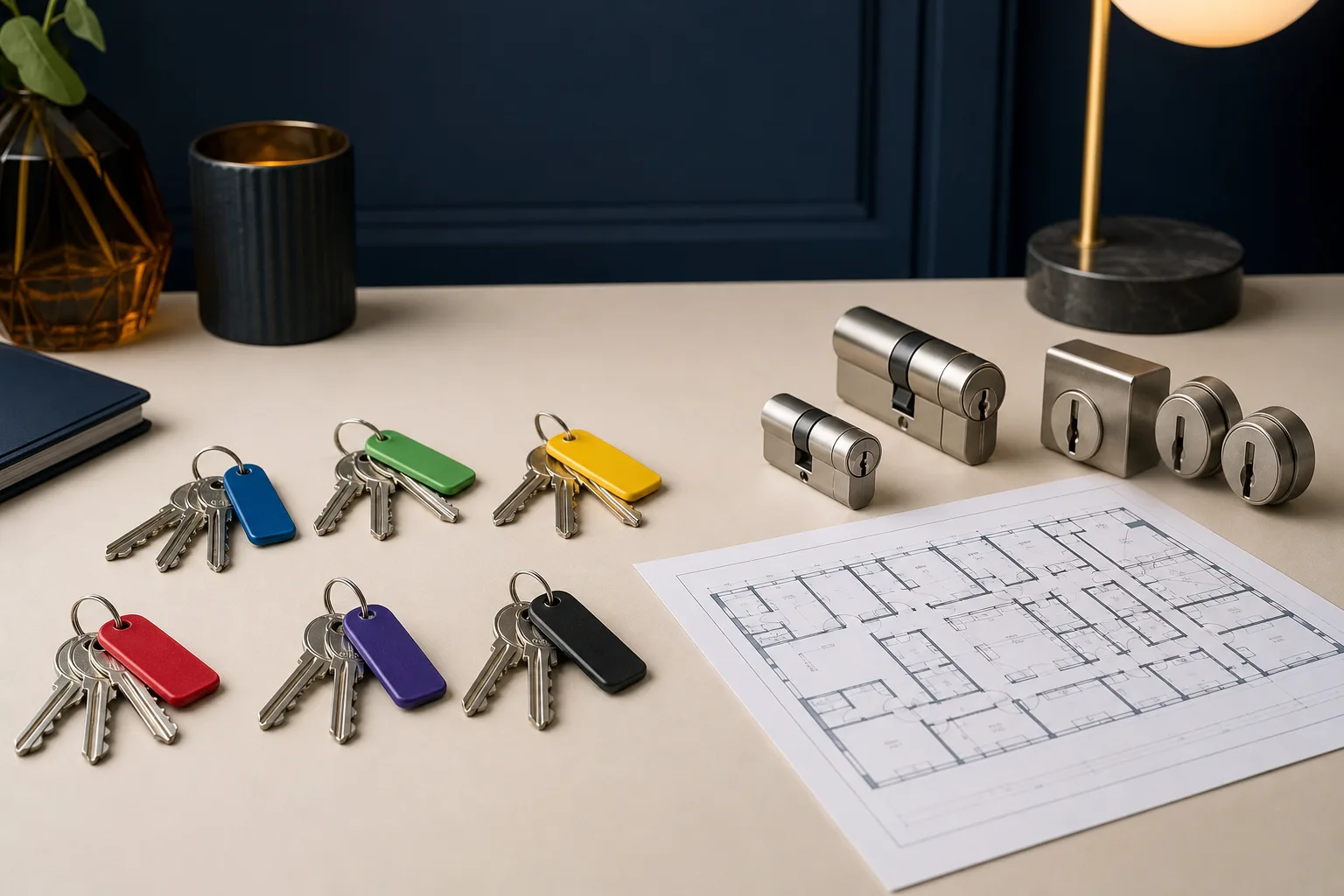
A master key system lets selected keys open several planned door groups. The safest design starts with roles and doors, then gives each person only the access they need.
Tell us what still works, what stopped working, and what you already tried. This helps us understand whether the problem is the key, lock, door, ignition, or remote before the visit.
We confirm that you can approve the work and review the price before service starts. If another repair is optional, it should be explained as a separate choice.
Choose the closest example. Small details can change the right service.
A planned master level can reduce key rings while staff keys remain limited to their normal work areas.
Tenant keys should stay within their suites while approved building staff retain planned service or emergency access.
New rooms, teams, shifts, and restricted areas can outgrow a simple keyed-alike setup.
Do not add more keys until existing doors, cylinders, key marks, and known access are audited.
Name every opening and note department, risk, normal users, hours, and whether emergency access is needed.
List what each job needs, not each person at first. This makes the system easier to manage as staff changes.
Choose who approves keys, who cuts or orders them, where records stay, and what happens when one is lost.
The right choice depends on the key, lock, door, or vehicle and what is happening now.
More hierarchy can add convenience but also increases the effect of a lost high-level key. Keep levels as simple as possible.
Cylinder brand, keyway, capacity, wear, and door function affect what can stay and what needs changing.
Reserve a clear naming and grouping plan for expected rooms, tenants, departments, and new sites.
Record doors, cylinders, users, old keys, restricted areas, and management needs.
Review which key level opens each door before hardware is changed.
Set compatible cylinders and use secure, clear identifiers that match the records.
Test every key-door relationship and record each issued key and holder.
Choose your area for local property, parking, access, and meeting-point advice.
Short answers before you call.
Keyed-alike locks all use the same operating key. A master system has separate user keys plus selected higher-level keys that open planned groups.
Use the fewest levels that support real roles. Extra hierarchy makes records, changes, and lost-key response harder.
Review every door it could open, confirm whether it may be found or copied, then plan the smallest safe rekey or system change.
Call with the exact location, a short description, and proof that you can approve the work.