Key will not turn
A worn key, steering lock pressure, debris, or worn ignition parts can stop rotation. Try the spare key once without force.
Emergency locksmith help across Philadelphia
A key that will not turn does not always mean the whole ignition must be replaced. Steering pressure, a worn key, a broken piece, or another ignition fault may be the cause. Do not force the key.
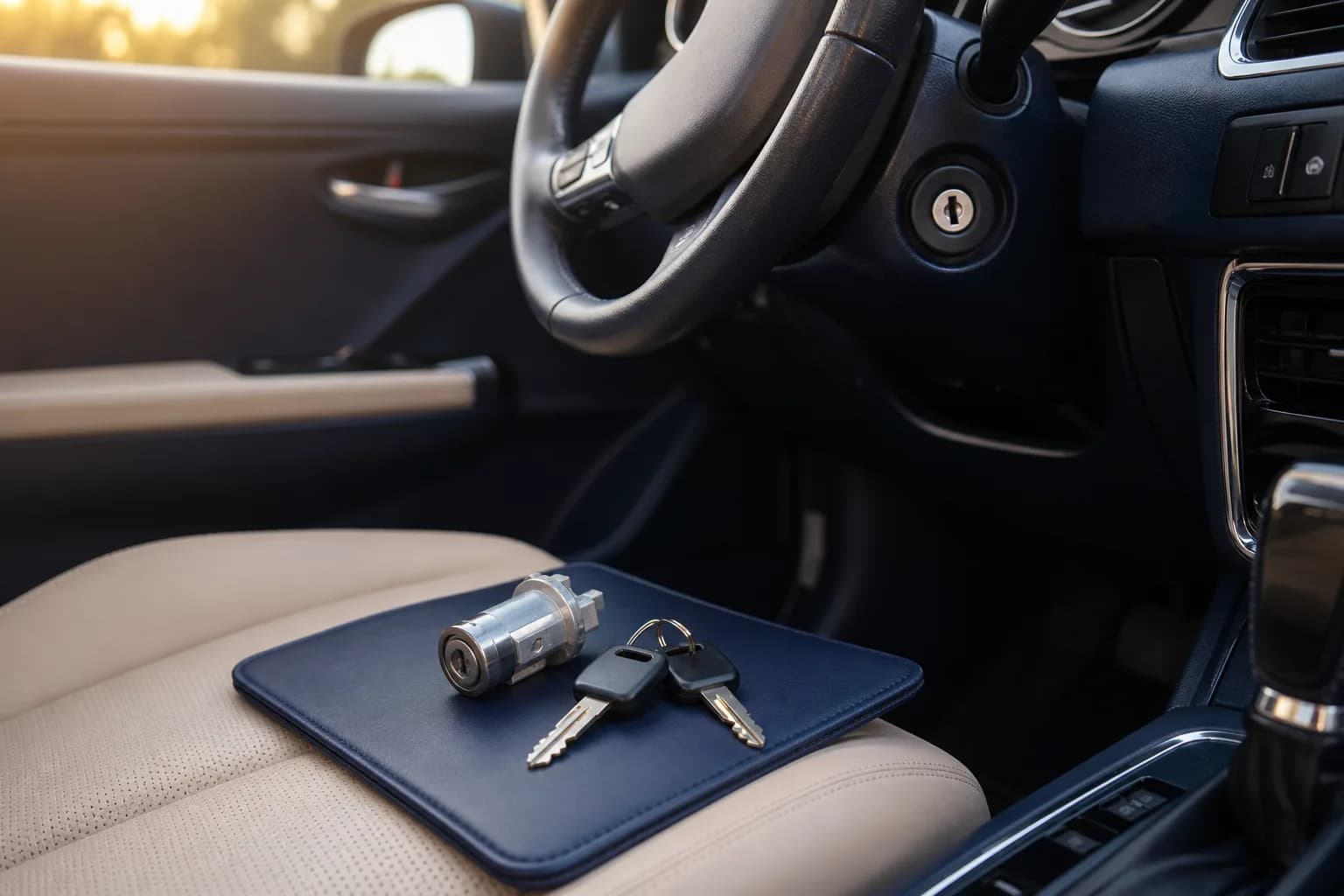
A key that will not turn does not always mean the whole ignition must be replaced. Steering pressure, a worn key, a broken piece, or another ignition fault may be the cause. Do not force the key.
Tell us what still works, what stopped working, and what you already tried. This helps us understand whether the problem is the key, lock, door, ignition, or remote before the visit.
We confirm that you can approve the work and review the price before service starts. If another repair is optional, it should be explained as a separate choice.
Choose the closest example. Small details can change the right service.
A worn key, steering lock pressure, debris, or worn ignition parts can stop rotation. Try the spare key once without force.
Gear position, steering pressure, cylinder wear, or a damaged key can trap it. Do not twist with pliers.
Stop turning the ignition. The broken piece and cylinder position affect whether clean extraction is possible.
This may involve the transponder, battery, starter, switch, or another vehicle system, not only the lock cylinder.
Gently move the wheel while lightly testing the key. Stop if the key bends or the cylinder feels loose.
A less worn key can show whether the original blade is the main problem. Do not copy a badly worn key.
Say whether the key inserts fully, turns partly, releases, starts the car, or causes a dashboard warning.
The right choice depends on the key, lock, door, or vehicle and what is happening now.
The cylinder, housing, switch, key, immobilizer, or vehicle power can each cause a different ignition problem.
Repair may work when the main parts are in good shape. Heavy wear, damage, or a broken housing may require replacement.
A replacement ignition may need to match the existing door key, or the vehicle may use separate keys.
Inspect the working edge, spare key, and any broken pieces.
Test insertion, rotation, steering pressure, and security warnings.
Compare extraction, key cutting, cylinder repair, or replacement.
Confirm smooth key removal, steering release, engine start, and door-key use.
Choose your area for local property, parking, access, and meeting-point advice.
Short answers before you call.
No. A worn key, steering pressure, debris, or repairable cylinder parts can cause the problem. Inspection should come before replacement.
Often, if the piece can be reached without further damage. Do not push it deeper or add glue.
Sometimes. It depends on the vehicle and replacement path. Ask whether key matching is possible before approving the work.
Call with the exact location, a short description, and proof that you can approve the work.