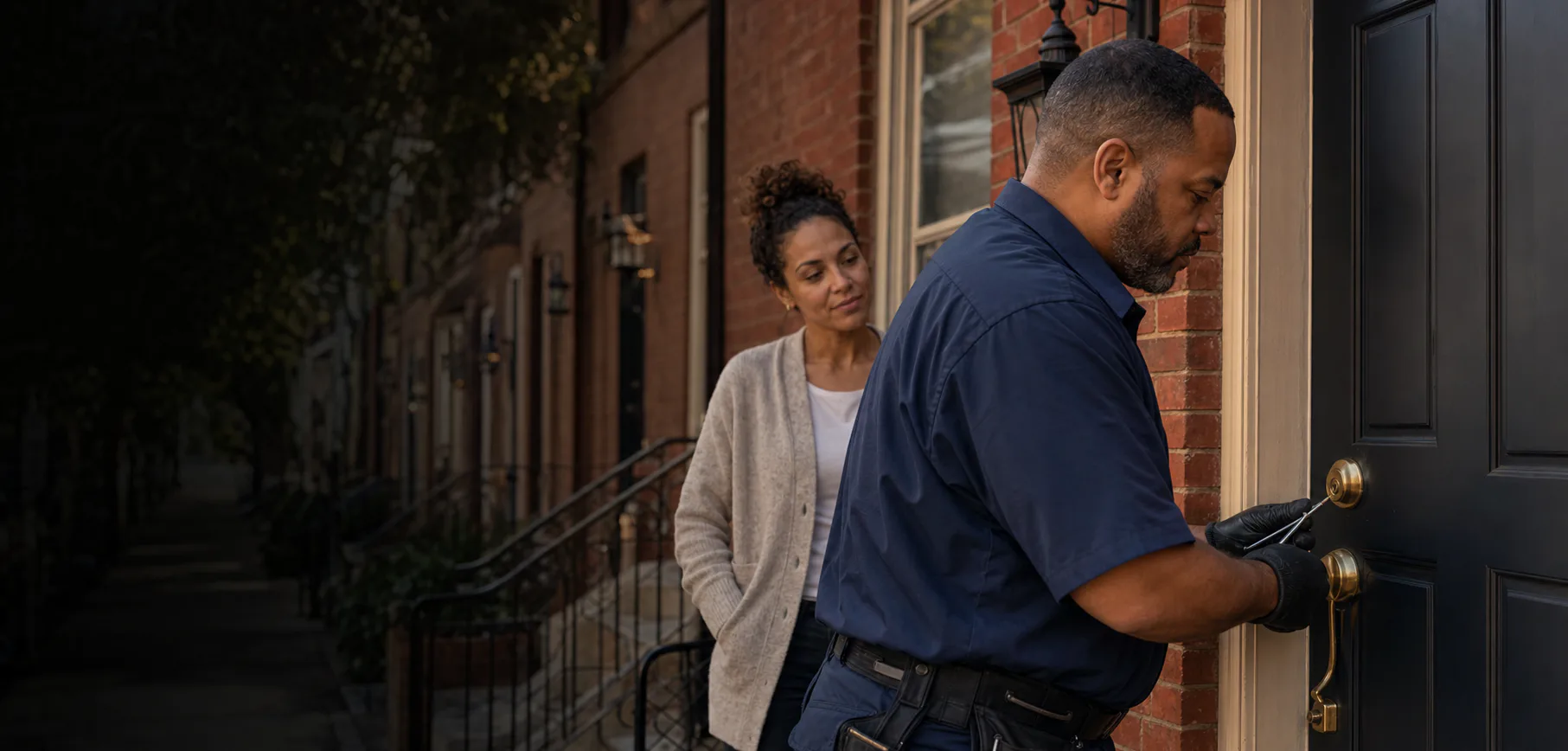
Move to a safe place, check approved ways in, gather proof of access, and call with the exact location and lock type. Do not force the key, door, or window.
- Move to a safe place
- Check for an approved spare key
- Call the owner or manager if needed
- Gather identification and proof of access
Move to a safe place
Get away from traffic, bad weather, an unsafe hallway, or any other immediate risk. If a child, pet, medical need, fire risk, or running vehicle creates danger, call 911 first.
Check allowed ways in
Look for a spare key, another approved entrance, building staff, a landlord, a roommate, roadside help, or a fleet contact. Do not climb, break a window, or force a door.
Do not keep forcing the key
Stop if the key bends, the lock turns loosely, or the door only opens when pushed hard. More force can break the key or damage parts that may still be repaired.
Gather proof of access
Have photo identification and proof that you live there, own the property, manage the business, work at the location, or can use the vehicle. Say if the proof is locked inside.
Give the exact meeting point
Share the full address and add the unit, entrance, floor, garage level, lot marker, vehicle color, or cross street. A street address may not show the actual door or car.
For a home lockout
Tell the locksmith if the door uses a knob, lever, deadbolt, mortise lock, keypad, smart lock, or security gate. Mention a second locked door or shared building entrance.
For a car lockout
Share the year, make, model, color, parking position, and whether keys are in the cabin or trunk. Tell the locksmith if the vehicle is running or parked in a managed garage.
For a business lockout
Identify the person who can approve entry. Mention storefront glass, panic hardware, a shared lobby, an alarm, building management, or any door that must stay available for safe exit.
Ask before work starts
Ask what method is planned, what the quoted price includes, and whether repair or replacement may be needed. Do not approve work you do not understand.
What to do
- Move to a safe place
- Check for an approved spare key
- Call the owner or manager if needed
- Gather identification and proof of access
- Write down the full address
- Add the exact entrance or vehicle position
- Describe the lock or key
- Ask what the price includes
What not to do
- ×Do not climb to a window
- ×Do not force a key that is bending
- ×Do not break glass unless emergency services direct you
- ×Do not allow work until the method and price are clear
Common questions
Short answers about the decision, safety, access, and what to ask before work starts.
Should I call 911 for a lockout?+
Call 911 when a child, pet, medical need, fire risk, traffic hazard, or other immediate danger is involved. A normal lockout is not usually a police or fire emergency.
Will the lock have to be drilled?+
Not always. The method depends on the lock, door, condition, and proof of access. Ask about the least damaging practical option first.
What if my ID is locked inside?+
Tell the locksmith during the call. Other documents, a manager, a lease record, registration, or another approved check may help confirm access.
What should I ask about price?+
Ask about the service call, labor, parts, after-hours charges, and anything that may change the total. Review the price before work starts.