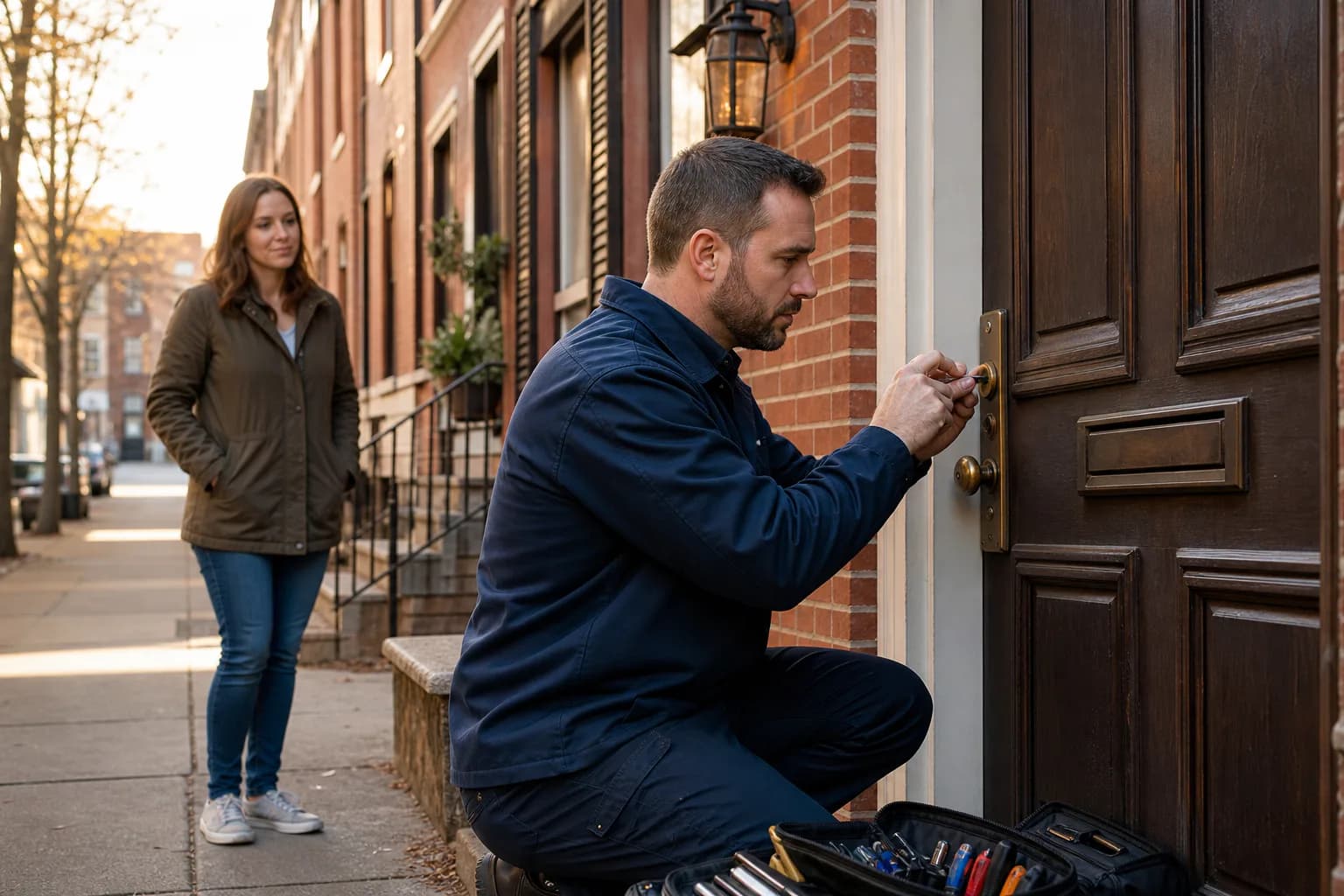
Rekey a working lock when you want old keys to stop working. Replace a lock when it is damaged, worn, loose, not compatible, or missing a feature you need.
- List every outside door
- Count the people who need keys
- Find any spare or old keys
- Check whether each lock is loose or damaged
Start with your goal
Choose rekeying when you want old keys to stop working and the lock is still in good condition. Choose replacement when the lock is damaged, worn, loose, or missing a feature you need.
What rekeying changes
Rekeying changes the pins or parts inside a compatible cylinder. The lock stays on the door, but it works with a new key. Old keys stop working after the job is complete.
When rekeying makes sense
Rekeying is often useful after a move, tenant change, lost key, staff change, or any time you do not know who has a copy. The lock must work correctly and use a cylinder that can be rekeyed.
When replacement makes sense
Replace a lock when parts are broken, badly worn, loose, missing, or not compatible with the key plan. Replacement may also be needed for a keypad, smart lock, stronger deadbolt, or different finish.
Check the door and frame
A good lock can feel broken when the door has dropped, the wood has swollen, or the strike is out of line. Test the lock with the door open and closed. This helps show whether the problem is the lock or the door.
Plan all outside doors together
Check the front, rear, side, basement, deck, garage, and connecting doors. Decide which doors should use the same key and which should stay separate. This can reduce key clutter and missed openings.
Think before adding a smart lock
Check the door thickness, backset, bore size, deadbolt movement, battery access, and building rules. A smart lock will not fix a door that is hard to close or a deadbolt that rubs the frame.
Ask what work is included
Before work starts, ask which locks will be rekeyed or replaced, how many keys are included, whether the doors need adjustment, and what will be tested. Make sure every included key works before the job is complete.
What to do
- List every outside door
- Count the people who need keys
- Find any spare or old keys
- Check whether each lock is loose or damaged
- Test each deadbolt with the door open and closed
- Note any smart lock or keypad needs
- Confirm landlord or condo rules
- Ask how many new keys are included
What not to do
- ×Do not replace a good lock only because the door is out of line
- ×Do not assume every lock can use the same key
- ×Do not install a smart lock on a door that does not close well
- ×Do not change shared building locks without approval
Common questions
Short answers about the decision, safety, access, and what to ask before work starts.
Is rekeying cheaper than replacing a lock?+
It often costs less because the existing lock stays in place. The final price depends on the lock type, condition, number of cylinders, keys, and door adjustment.
Can several doors use one key?+
Often yes, when the locks are compatible. A locksmith must check each door before confirming which locks can share one key.
Will rekeying fix a lock that sticks?+
Not always. A sticking lock may be caused by dirt, wear, a damaged key, loose hardware, or a door that is out of line.
Should renters change or rekey locks?+
Check the lease and ask the owner or manager first. Shared entrances and building systems should not be changed without approval.