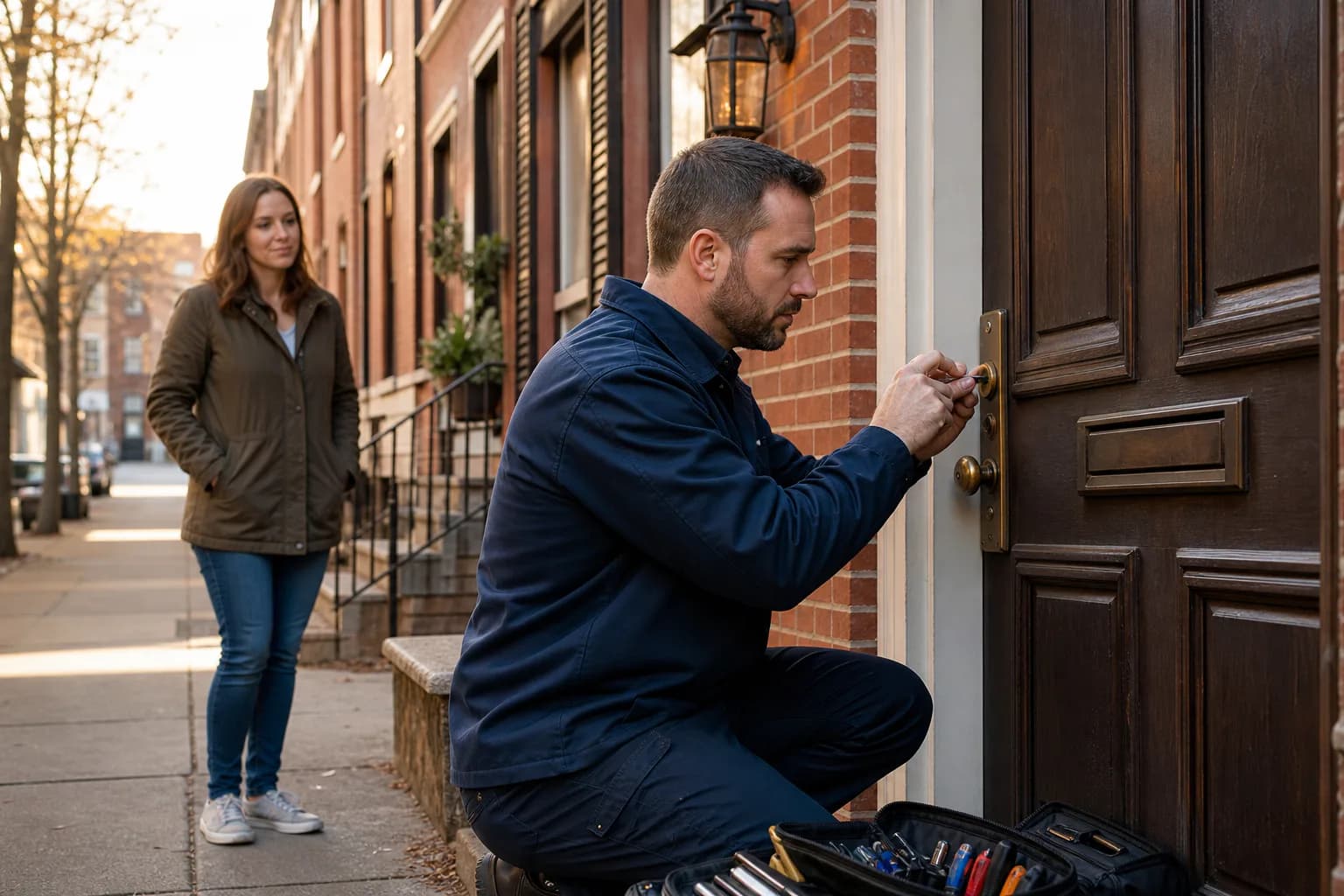
Confirm who can approve changes, list unit and shared doors, choose rekeying or replacement, plan who receives keys, and test every opening before move-in.
- Confirm owner or manager approval
- List unit and shared doors
- Count all old keys
- Check lock and door condition
Confirm who can approve changes
Check the lease, management agreement, and owner instructions before changing a lock. A tenant may control the unit door but not a lobby, gate, vestibule, mail area, or shared entrance.
List every opening
Walk the unit and list the front, rear, side, basement, deck, garage, storage, and connecting doors. Mark which doors belong to the unit and which are shared.
Choose rekeying or replacement
Rekey a working lock when old keys need to stop working. Replace hardware that is damaged, loose, missing parts, or unable to give the people and doors the access they need.
Check the door before the lock
Test the deadbolt with the door open and closed. Look for loose hinges, rubbing, a weak strike, swelling, or a latch that misses. Door alignment may be part of the job.
Plan who receives keys
List each tenant, owner, manager, maintenance worker, cleaner, or approved vendor who needs access. Give each person only the access needed for the role.
Document the handoff
Record the doors completed, number of keys issued, who received them, and the handoff date. Do not label a loose key with the full property address.
Test before move-in
Use every new key on every included door. Confirm that each door closes, latches, locks, and opens without lifting, pushing, or pulling harder than normal.
What to do
- Confirm owner or manager approval
- List unit and shared doors
- Count all old keys
- Check lock and door condition
- Choose rekeying or replacement
- Decide who gets each key
- Test every key
- Record the final handoff
What not to do
- ×Do not change a shared entrance without approval
- ×Do not assume a returned key was never copied
- ×Do not label keys with a full address
- ×Do not ignore a door that must be pushed or lifted to lock
Common questions
Short answers about the decision, safety, access, and what to ask before work starts.
Should a rental be rekeyed between tenants?+
It can stop old keys when the lock is compatible and in good condition. The owner or manager should confirm the property policy and local requirements.
Can the unit and building door use one key?+
Sometimes, but shared building doors need manager approval. The locks must also be compatible before one key can work for both.
What should be recorded after rekeying?+
Record the completed doors, key count, recipients, handoff date, and any lock or door issue that still needs repair.
Can a tenant rekey a lock without the landlord?+
Check the lease and ask the owner or manager. Permanent changes may require approval, and shared doors should not be changed without it.